Here's my first go at an Edtalk. What a powerful space for self-assessment! Note to self - look at the camera! Thanks to Jane, Jedd and the team at CORE
Showing posts with label open-plan. Show all posts
Showing posts with label open-plan. Show all posts
Tuesday, February 14, 2012
EdTalk
Here's my first go at an Edtalk. What a powerful space for self-assessment! Note to self - look at the camera! Thanks to Jane, Jedd and the team at CORE


Sunday, November 6, 2011
A legacy of open-plan
Open-plan classrooms have left trailing behind them somewhat of a legacy in terms of the way we think about newer open learning spaces. One legacy in particular, I suspect, is an enculturated hesitancy for schools to open up spaces again. The collective memory of an education innovation that generally speaking did not work is a strong one and comparisons between the two are understandably inevitable.
Imagine you'd spent several years teaching in an open-plan space back in the seventies or eighties and you hadn’t enjoyed it. You'd found it a challenging experience and certainly not a professional fulfilling one. You remember the noise, the poorly designed spaces and the stress that teachers often found themselves working under...and now you see the introduction of what appears on the face of it to be similar open classroom spaces being constructed. How would you feel? Well, perhaps a slight sense of déjà vu coupled with a dose of skepticism.
It is not entirely surprising to hear then that those teachers who taught in these spaces earlier in their careers are viewing our new teaching and learning environments with some suspicion. At a recent conference our team was presenting at, the by now familiar catch cry of the return to open-plan came up again. Are these new open learning spaces, these modern learning environments, not just a re-hash of an idea that didn’t work before, one teacher questioned, recalling her own experiences three decades ago. To all intents and purposes, she suggested, they look much the same. This is not an uncommon response to our spaces and one I believe that represents a quite deeply held belief about what a classroom should look like.
The tendency it seems is to superimpose 'open-plan' memories onto new open learning spaces and to recall all that that represents. Maybe the language is partially to blame. Perhaps it’s the word ‘open’. I think we need to focus less on the ‘open’ now and more on the ‘learning space’. I wonder if in fact calling the spaces ‘open learning spaces’ at all could be construed as misleading and setting ourselves up for failure. It’s certainly something that I’d be guilty of. Perhaps I should be using flexible or purposeful as is the vogue in Australia, agile as Stephen Heppell would prefer to call them, or Modern Learning Environments, the New Zealand Ministry’s preferred nomenclature.
Sunday, August 14, 2011
Open-plan in New Zealand
Much of my own reading around open-plan schools has been centred on research carried out in England. A recent visit to Auckland University library though uncovered a Department of Education publication, a Report on Open Plan Education in New Zealand Primary Schools, published in 1977.
By the mid 1970s, according to the report, there were 200 open plan units in New Zealand, catering for 3.5% of primary children. This was set to grow to 474 and 8% by the end of 1978. At the time of the report two-thirds of the units had been operating for less than two years. Many of these units existed in schools that also had more traditional teaching classrooms.
The report was the result of a systematic study into open-plan schools, albeit in their early stage of development in New Zealand, and brought together views of teachers, principals and architects. What it recognized was that increased numbers of children were being taught in open-plan schools, and that whilst there was a body of evidence in the UK in support of them, the debate “lacked an adequate empirical basis in New Zealand practice” (p. 9). The report therefore set out to address such areas as the adequacy of training of teachers for open-plan, the attitudes towards it from teaching staff and the professional educational practices required from teachers.
The report’s primary recommendation was that:
“We recommend that the development of open plan education be continued and that this development be subject to continuing evaluation” (p. 11).
The report discusses the general satisfaction with open-plan education and the “favourable views of benefits for children expressed by a majority of the principals of schools with open plan units, teachers in open plan units at the time of the survey, and teachers who had formerly taught in open plan units” (p. 12).
Despite its recommendation the report did make some qualifications; that many principals and teachers were dissatisfied with some features of the open-plan units; that 55% of teachers reported a higher level of stress that when working in a traditional classroom; that some teachers were concerned about the effect on new entrants, disruptive children and shy children; and that only a minority of teaches received any training for teaching in the new spaces.
In response to some of these qualifications the report suggested that in building schools with open-plan units, there should also be provision for more traditional spaces as well. It noted that spaces should not be built to accommodate any more than the equivalent of four classes of children, and that there should be a withdrawal space large enough for fifteen children. It also suggested that pre-service training be provided in areas of co-operative teaching and in the use of open-plan spaces.
I think what’s interesting looking at the report now was the relatively small amount of it dedicated to student outcomes and learning. The information collected on students consisted, as it says, “of the opinions of both present and former open plan teacher, principals and inspectors” (p. 57). Of these a large majority surveyed agreed that achievement was “at least as high as in conventional classrooms” (p. 66). Of real interest though is the fact that of the principals (83% of whom headed schools that also had traditional classroom spaces) a large majority favoured open-plan.
There’s a lot more to be pulled out of this report and I’m interested to look further into the views of teachers at the time. It’s interesting too, to consider the projections that there would be potentially close to 500 open-plan units in New Zealand schools at the end of the 1970s. I wonder how many there are left now?
Reference
Department of Education. (1977). Report on open plan education in New Zealand. Wellington: Department of Education.
Tuesday, August 9, 2011
Survivor: Open-plan

I’m not sure it’s going to make such compelling viewing as a group of competitors attempting to outwit, outplay and outlast each other on a isolated tropical island, but clearly some academics in the mid 1970s thought that teachers needed to think carefully before putting themselves into an open-plan situation. Survival was the key.
Beardsley, Bricker and Murray (1973), in a report for the Metropolitan Toronto School Board suggested that whilst there was much literature at the time exhorting the virtues of open-plan classrooms, there was in fact very little empirical research backing it up and certainly little by way of practical advice for teachers entering them. They suggested that criticism in the popular press focused on students not learning the basics, children needing more privacy, students having fun “but not learning to cope with the harsh realities of life” (p. 47), having too much freedom and missing out on the flexibility and spontaneity available in more traditional classrooms.
Staff relations, according to the report, were most critical for an open-plan environment to succeed. “The fact that teachers must work in full view of one another generally means that they must also interact with one another” (p. 48). In a traditional school, the report continues, teachers were able to close doors if they didn’t get along or want to work together but that wasn’t possible in an open-plan situation. There needed to be good communication, respect and trust in order for it all to work.
The report also addresses the issue of team teaching and suggests that working closely with colleagues in a team teaching situation requires “qualities that are quite different from those traditionally emphasized for teachers. In addition to organizational skills, successful team teaching requires flexibility, ability to cooperate and work effectively with other adults, consideration of others, ability to accept conventional criticism and to criticize constructively” (p. 50). The absence of a personal space defined by walls was seen as a real threat to teacher’s sense of territory and physical wellbeing. It’s interesting to reflect on the ‘qualities’ of teachers who are going to find success teaching in modern learning environments.
A second paper along the Survivor theme came out of Stanford University a few years later in 1976 suggesting that “teachers are convinced that their relationships with students, their instructional programs, their friendships with other teachers, and even their ‘sanity’ are at stake” (Roper and Nolan, 1976, p. 5). The paper was authored to help prepare teachers, administrators and students move into new open-space buildings and has a strong compliance focus in order to enable properly running schools. “It is intended to help teachers systematically plan to prevent chaos” (p. 8). I’m not sure what proportion of teachers who read it continued their move into open-plan.
What needed to be focused on, according to Roper and Nolan, by was of coordinated efforts from the teachers, things like enforcing standards for student behaviour, agreeing on movement patterns, scheduling activities to minimise noise, arranging furniture and equipment, and involving parents. So there is a strong emphasis on whole school rules- “Students cannot move to another teacher’s area without permission” (p. 9).
In fact, in the first week of one school opening their new building, all students were required to complete a behavior monitoring checklist each day and to retake it until they scored 100%: “I came in the correct door quietly, I completed my dictionary work, I found my seat easily, I quietly cleaned up my area, I remembered to put my chair in, I turned this checklist in at the correct door when leaving” (p. 11).
There is a strong sense from both of these papers of teachers insufficiently prepared for teaching in these open-plan environments and also a sense of some teachers being forced into these spaces. A strong sense too of it being a teacher’s environment rather than a learners. Beardsley et al do at least acknowledge that “what the open plan school can offer is the possibility of alternatives” (p. 50) and that any school is only going to be as successful as people make it.
Aside from the Survivor overtones, the language of coping, teacher’s sanity at stake, personal trauma and unlimited possibilities for chaos, there are perhaps some lessons we can learn here.
No, a modern open learning space is not for everyone and teachers do need to consider if it’s a good fit for them. Yes, teachers are more ‘on display’ to each other, but what opportunities that presents in terms of incidental professional development. Yes, teachers need to interact with each other but what opportunities that presents in terms of pedagogy and collaboration. And this I think is the key. It’s about collaboration, not competition.
It’s about the space belonging to the learners, not to the teachers. It’s about engaging with the environment rather than it being a barrier to learning. And its about thriving in a place designed for engaging, creative, fulfilling learning rather than simply surviving in it. I’m excited by the opportunities presented by modern open learning spaces and for me this is an island I don’t want to get voted off.
References
Beardsley, B., Bricker, K., & Murray, J. (1973). Hints for survival in open plan schools. Curriculum Theory Network(11 Spring, 1973), 47-64.
Roper, S. S., & Nolan, R. R. (1976). How to survive in the open-space school: Stanford University.
Saturday, August 6, 2011
Eveline Lowe School: A design prototype

Continuing to look at early open-plan schools, a second example, taken from Pamela Wollner’s book (2010) is Eveline Lowe Primary School in Southwark, London. It was constructed in 1966 and built on the ideas of Finmere School. It developed the open-plan idea further and for a much bigger urban school and was “intended that the school should act as a prototype to be emulated across the UK” (Woolner, 2010, p.9). According to Woolner, this did eventuate as school building took off in the 60s and 70s, to the extent that by the mid 70s the architectural assumption was that open plan was the norm for primary schools.
Eveline Lowe school was built on an L-shaped plan arranged into four areas, each with plenty of open space. Bennett et al (1980) explain that the teaching spaces were contained learning bays, interest areas, workshop spaces and home bases where groups of children could work with teachers. What is interesting too is that it was noted by the Plowden Report (England, 1967) as a space that would allow teachers to “‘cooperate more easily’ and to provide for ‘flexibility of organization and individual learning’” (Cited in Bennett et al, 1980).
In questioning the relative success of Eveline Lowe School in comparison with subsequent open-plan schools, Woloner (2010) suggests that it benefitted from being an original, “with later copies becoming increasingly formulaic, ill-considered and lazily implemented” (p. 10). She also makes the important point that the building took up a much larger area than the majority of schools built over that period. How much space we should be providing per student is a valid consideration.
Interestingly Eveline Lowe School (reported in e-architect) has undergone substantial changes in the last couple of years. Selected as a pre-cursor to the Schools for the Future programme, it has recently expanded to accommodate more children and modernized whilst still respecting its design philosophy and open-plan arrangement. The original buildings, since listed, have been left intact and refurbished. It’s interesting to view old and new together.


References
Bennett, N., Andreae, J. et al. (1980). Open Plan Schools. Windsor: Schools Council
England, Central Advisory Council for Education (1967). Children and their Primary Schools: A report of the Central Advisory Council for Education, England. London
Woolner, P (2010). The design of Learning Spaces. London: Continuum
Image of Eveline Lowe School interior retrieved from www.20thcenturylondon.org.uk
Image of exterior of old Eveline Lowe School retrieved from www.london-se1.co.uk
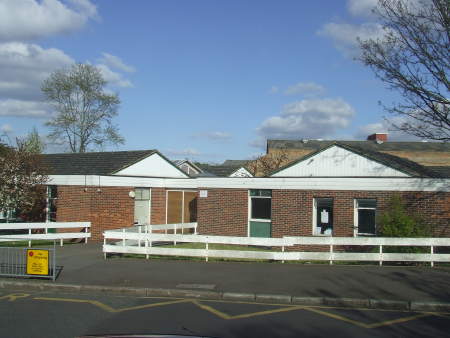
Image of exterior of new Eveline Lowe School retrieved from www.lengard.co.uk
Sunday, July 31, 2011
Finmere School: Landmark of open-plan

Pamela Woolner’s book, The Design of Learning Spaces (2010) sets out to consider current issues in the design of new learning environments from an educational rather than architectural perspective. It’s an interesting starting point for me to begin looking into the emergence of the open plan school movement as it provides some concrete examples of early adopting schools in the UK. The four schools she uses as examples were all, for one reason or other, considered landmark buildings. What Woolner has set out to analyse more thoroughly is how these schools have stood the test of time as the relationship between education and architecture changes.
One of these schools, Finmere School in rural Oxfordshire was built in 1959. It was the first to utilize folding partitions to divide and open space, with the classroom itself divided into areas for different learning activities (Woolner, 2010). Although only a two classroom and hall school it was, according to Pearson (1972) one that would “set the course of primary school design for at least a decade”, and one that is referred to frequently in open plan literature (Bennett et al. 1980).
Finmere School was designed less with architectural aims and more with educational influences in mind (Woolner, 2010). Teaching and learning had seen considerable changes since pre war school buildings were constructed and there was a need for designs to alter. Bennett et al (1980) reflects on the fact that the early 1960s had seen increased emphasis on project learning, creativity, centres of interest and of arrangements in the environment that allowed children to work on their own or in small groups. This put new demands on the classroom and teachers were requiring more flexible environments that traditional spaces were unable to offer. “Open planning was simply a natural response to the way primary teachers were already organising their classrooms (p. 19).
The design of Finmere was based on thinking aimed at supporting this more child-centred approach to teaching and learning and was clearly progressive at the time. Being a rural school teaching a population of fifty children from five to eleven meant that there was a real need to be able to group and regroup children and at times to have children of different age groups learning together (Woolner, 1980). The design therefore represented a practical solution to the learning needs of the children and also the teachers’ needs.
How well has it stood the test of time? Woolner collected information from the current head teacher who commented that they “no longer open up the concertina doors and work in an ‘open-plan’ way. Teachers found the noise level too high when working in this way and also behaviour issues increased” (p.8.) Notable too was a more recent move back towards whole-class teaching in UK primary schools and the need to find wall space for interactive white boards.
Finmere School was clearly revolutionary at the time and was partially responsible for setting the trend for open-plan classroom spaces in the 1960s. It’s a valuable exercise to dig back into the literature on schools such as this one in order to understand the thinking of the time that was influencing school design.
References
Bennett, N., Andreae, J. et al. (1980). Open Plan Schools. Windsor: Schools Council
Pearson, E. (1972). Trends in school design. Macmillan (for the Anglo-American Primary Education Project)
Woolner, P (2010). The design of Learning Spaces. London: Continuum
Image of Finmere School retrieved from http://shelswellparishes.info/finmere/finmerehistory/history/schools/new_school.htm
Thursday, July 28, 2011
Whatever happened to all the open-plan schools?
Whatever happened to all the ‘open plan’ schools in New Zealand? Why is it that when you visit schools that used to be well known for open spaces they look so different now? Often spaces have been completely remodeled or just had so many partitions and barriers put back up that they little resemble their former selves.
What caused this to happen, essentially recreating what presumably they’d tried so hard to replace? Was it just a trend that saw the building of open plan spaces in the first place, and who’s to say that these new open learning spaces don’t go the same way?
In conversations with teachers who used to teach in these spaces I get the impression that in many cases teachers still had their own class, still occupied a part of the wider space and would operate there in exactly the same way as if they’d been in a single cell classroom. Although there were no physical walls there were certainly invisible ones. There was little movement of learners between learning areas and even less of the teachers. I realize that not all schools operated like this though and I’m keen to touch base with teachers who’ve worked in these spaces. I think there are some great narratives out there that can help us understand what did and didn’t work.
Subscribe to:
Posts (Atom)